

Franchise desk report · October 2026 · New York
Shipley Donuts targets Florida counties at franchise show
The company said it would exhibit at the IFA World Franchise Show in Fort Lauderdale and was seeking operators for Palm Beach, Broward, and Miami-Dade. No Florida agreement has been announced.
What was announced
Shipley Donuts said it planned to appear at the IFA World Franchise Show in Fort Lauderdale and was looking for operators across several Florida counties, naming Palm Beach, Broward, and Miami-Dade. Read that carefully and it is a territory availability statement, not a signed deal.
An availability statement tells you where the brand wants coverage. It does not tell you where the brand has commitments. That gap matters if you are following actual store openings, because available territory can sit open for a long stretch — sometimes years — while a company talks to prospects and waits for the right operator and the right site to line up at the same time.
The counties were attributed to the company rather than presented as confirmed development. Nothing in the announcement names a franchise group, a unit count, or a first-store date, which are the three details that turn a territory list into a real expansion story.
Why franchise shows matter
Franchise expos are where a lot of agreements start, because they put a brand in front of people who are already looking to buy into one.
Showing up is a signal of intent and a place to meet prospects. It does not obligate anyone to sign. Some exhibitors walk away with letters of intent. Others leave with a stack of business cards and conversations that never reach a site visit. For readers, the useful takeaway is that a show booth is the earliest possible signal, and it is also the one most likely to fade.
A booth is intent
Booking floor space and staffing a table costs money. That spend is a public statement about which markets the brand is prioritizing this year.
A booth is not a deal
Meetings at a show start a conversation. Franchise agreements are signed later, after territory, site, and operator finances are reviewed.
The follow-up slip
Most show leads go quiet. When coverage appears weeks later with a named group, that is the point where the story becomes trackable.
The three counties and what they cover
Palm Beach, Broward, and Miami-Dade form a continuous stretch along Florida's southeast coast, running from West Palm Beach down through Fort Lauderdale and into Miami. That is one of the densest corridors in the state, with year-round traffic and a tourist season that swings store volumes up and down.
It is also a market where commercial real estate costs and competitor count run high. Both squeeze the arithmetic a franchisee has to run before signing: what a drive-thru or inline site costs per month, what volume a day needs to hit, and how many months of slow season the operator can carry.
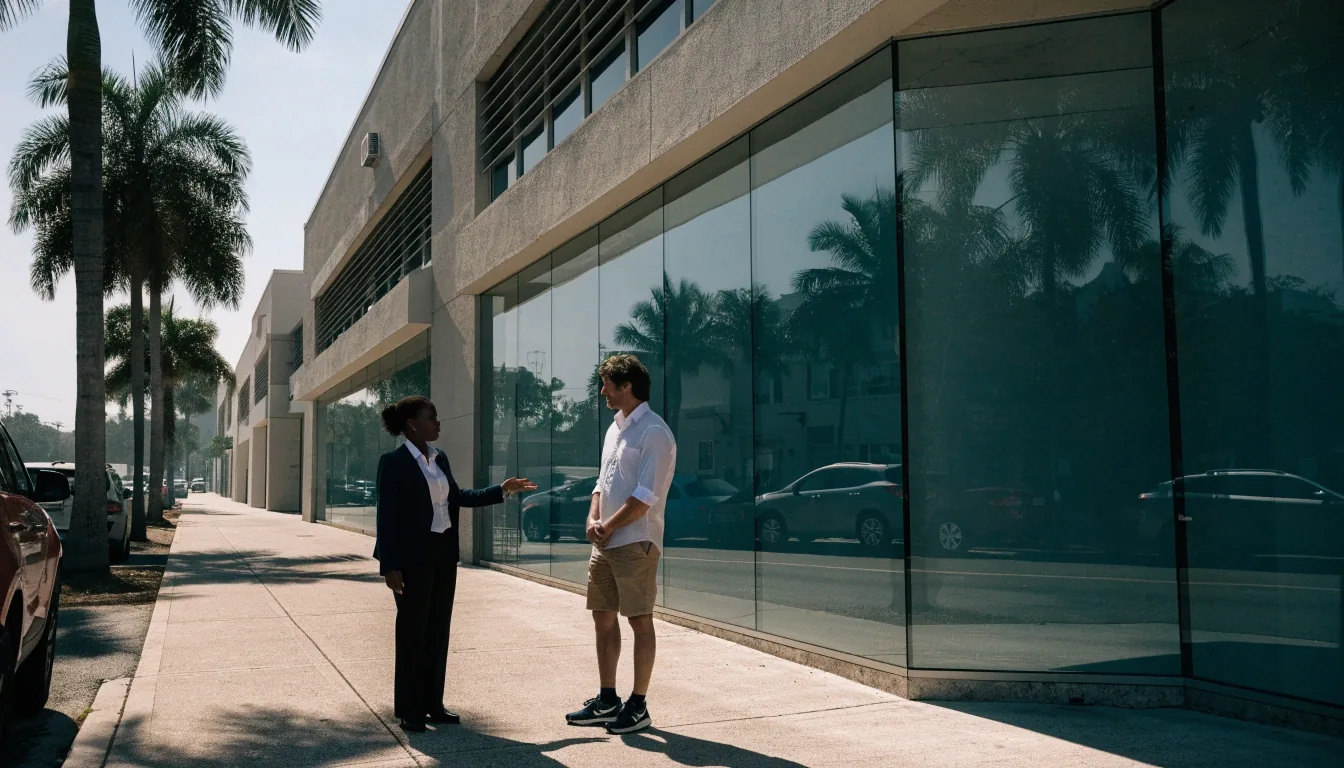
A drive-thru or inline corner unit on the southeast coast. Real estate cost, not interest, is usually what decides whether a site works.
What the Florida push is not
It is not a development agreement. It does not include a first-store date. It does not name a franchise group. The clearest marker of the difference is the missing unit count: no number was attached to Florida.
Compare that with the Cincinnati deal, which carried a three-unit figure, or the Metro Detroit agreement, which named fifteen Michigan locations. Those were count-and-place announcements. This is a target list.
Florida in the national expansion
Shipley's 2026 activity has centered on new-state entries through franchise groups, and Florida would continue that pattern if deals are signed. The state is also a large market on its own, which changes the shape any deal would take.
A single operator covering Palm Beach, Broward, and Miami-Dade would be unusual. Those three counties alone carry more population than most entire states, and they behave like different markets: a seasonal coastal economy in Palm Beach, a dense suburban and airport corridor in Broward, and a bilingual urban market with its own traffic rhythm in Miami-Dade.
More likely is several groups across the territory, each holding a slice and a build schedule. We will report the structure when there is something public to report — group names, county assignments, and target openings. Until then, treat the three counties as open territory rather than booked ground.
What to watch for next
The next real signal is a signed Florida agreement with a named franchise group and a target date attached to it. Nothing softer than that moves the story forward.
Step one
A named operator
Watch for a franchise group name attached to Florida. Without a name, there is no party to hold to a schedule or a county map.
Step two
County assignment
Which of the three counties the operator actually holds, and whether that is a single-county slice or more than one. That shapes how fast anything gets built.
Step three
A target date
A development agreement usually carries an opening window. That date is what you track against, and it is the first thing that slips.
If you are tracking a specific area, local commercial real estate activity and permit filings often surface before a franchise announcement does. A landlord leasing a drive-thru pad, or a city reviewing a plan for a food service tenant, can show up months ahead of a press release. That is a useful early indicator, not proof that a particular brand is coming.
Sources for this story
This report is based on franchise trade coverage of the brand's plans for the IFA World Franchise Show and the counties it identified, along with the company's own franchise news page. We have attributed the county list to the company rather than presenting it as confirmed development.
Where we could not verify a claim, we said so in the text rather than smoothing it over. When a Florida agreement is signed and announced, we will report the group, the counties, and the build schedule as separate details so you can see which parts are firm and which are still targets.
Questions readers asked about the Florida push
Does this mean Shipley Donuts has committed to Florida stores?
No. The announcement was a territory availability statement from the franchise side. It identifies where the brand wants coverage, not where it has signed commitments. No Florida agreement has been announced to date.
Which Florida counties were named?
Palm Beach, Broward, and Miami-Dade. Together they run down the southeast coast from West Palm Beach through Fort Lauderdale to Miami, which is one of the most densely populated stretches in the state.
How is this different from the Ohio and Michigan announcements?
Cincinnati carried a three-unit figure and the Metro Detroit agreement named fifteen Michigan locations. Both were count-and-place announcements with a named group. Florida has neither a unit count nor a named operator attached, which is the clearest way to tell a recruitment push from a signed deal.
Where should I look for earlier signals in my own county?
Local commercial real estate listings and city permit filings often surface before a franchise announcement does. A drive-thru pad being leased or a plan review for a food service tenant is worth noting, though it is an early indicator rather than confirmation that a particular brand is coming.

Tip line
Tracking a Florida site in your area?
If you have seen a lease, a permit filing, or a build-out in Palm Beach, Broward, or Miami-Dade that looks like a doughnut shop fit-out, send it our way. We check every tip against filings and public records before we report it.
Shipley Donuts Journal · 315 E 28th St, Brooklyn, NY 11226 · +14452322690 · RenoGalvez@isaakblackwell.com · Monday–Friday, 9:00 AM – 6:00 PM